
Biography
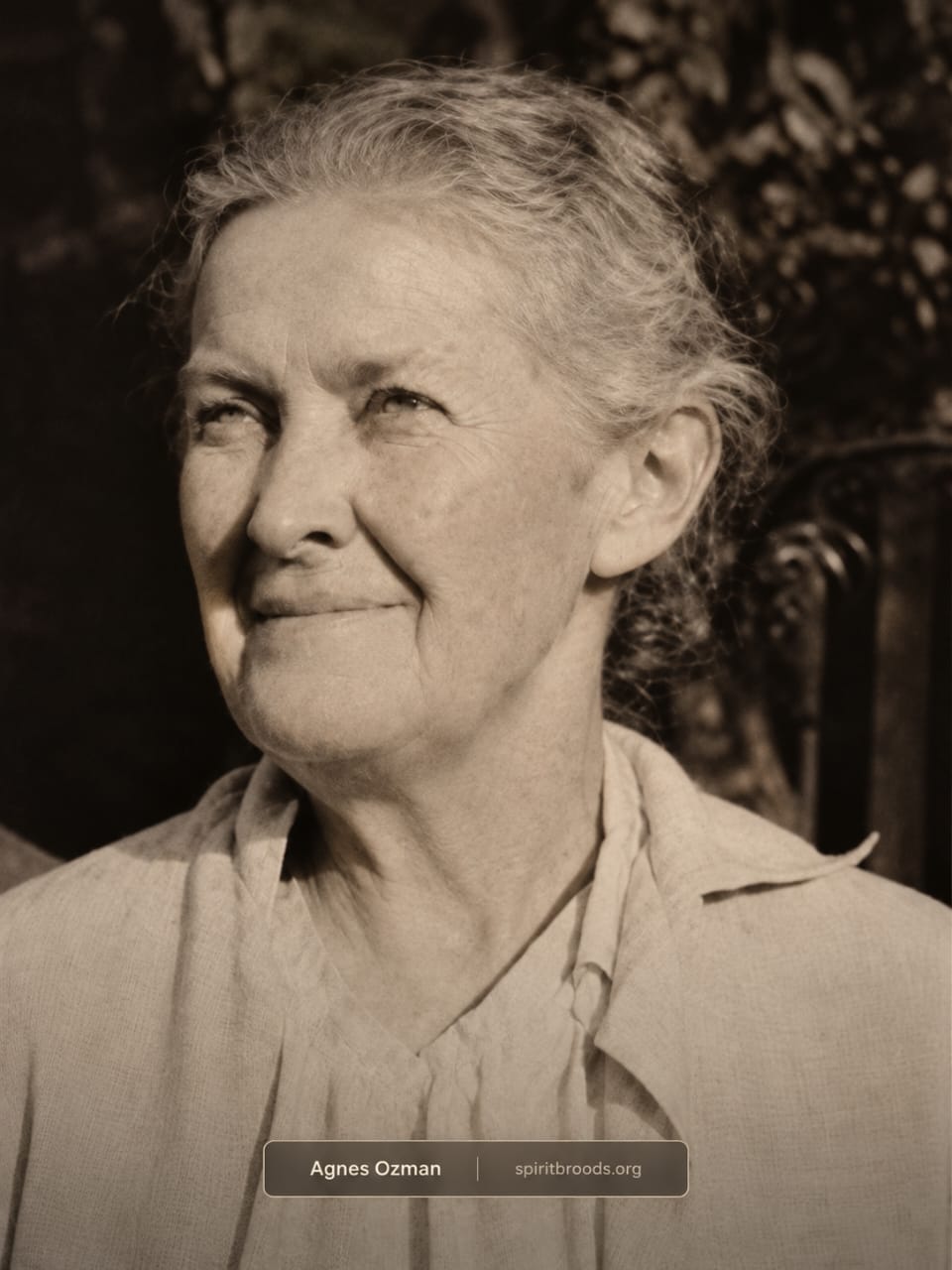
Agnes Ozman was born in 1870 in Albany, Wisconsin, and grew up in a Methodist home in the American Midwest. As a young woman she felt a calling to serve God and trained for ministry through several short courses and mission schools. She worked in city missions in Kansas City and St. Paul and served among the poor. She was a quiet, earnest woman with a desire to know more of the power of the Holy Spirit. That desire led her to Topeka, Kansas, in the fall of 1900.
There a preacher named Charles Parham had opened a small Bible school in a large house known as Stone's Folly. The school had no set fees and about forty students. Parham asked them to study the book of Acts and to find what the Bible teaches about the baptism of the Holy Spirit. After weeks of study and prayer, the students reported that the Scriptures pointed to speaking in tongues as the sign. They prayed for it through the final days of 1900. On the evening of the new year, January 1, 1901, Agnes asked Parham to lay his hands on her and pray that she might receive the Spirit. She later said that a glory seemed to fill the room and that she began to speak in another language. Witnesses said it was a language that no one there knew. She was about thirty years old.
Parham and his students believed that this was the same gift that fell on the church at Pentecost, and many Pentecostals count that evening as the beginning of the modern movement. Within a few days, others in the school had the same experience. For a short time, it seemed that tongues might be a gift of foreign languages meant to speed the work of missions. Some people reported that Agnes wrote Chinese characters while she was praying, and others believed it was a real language. Later experience showed that the missionaries who went out expecting to preach in new languages still had to learn them like everyone else. The early movement had to rethink what the gift was for.
Her own life was not one of fame. After the school closed, she traveled and spoke about her experience, and for some years she lived a difficult life with little security. In 1911 she married Philemon LaBerge, a Pentecostal worker, and they ministered together. Over the years she worked in evangelism and mission work and sometimes lived in poverty. She was never a platform star, and the leaders of the movement that grew up from Topeka, such as William Seymour in Los Angeles, became better known. She faded from the center of the story while others carried it around the world.
In later years she lived in Los Angeles and spent time in a simple home. She was a witness to what had happened and remained loyal to her faith. She died in 1937. The movement she helped to begin has grown to hundreds of millions of people.
There are questions about the early Topeka story that the church has had to handle carefully. Historians have noted that some early claims were later corrected, and that the doctrine of tongues as the necessary sign of the Spirit has been debated by believers who love Christ. What can be said safely is that a hungry young woman asked for more of God and that the Lord used her to mark a turning point in the history of the church. She was a person who sought the Spirit with sincerity and who accepted what came without seeking a name for herself.